Bridging the digital divide with seamless 3D connectivity
After more than three years of collaborative research under Horizon Europe, the ETHER (sElf-evolving terrestrial/non-Terrestrial Hybrid nEtwoRks) project has reached its conclusion, delivering a compelling vision for how future 6G networks can become both globally inclusive and environmentally sustainable. At a time when demand for ubiquitous connectivity continues to accelerate, and large parts of the world remain underserved, ETHER demonstrates how integrating terrestrial and non-terrestrial networks into a unified system can fundamentally reshape the way communication infrastructures are designed and operated.
Coordinated by the University of Luxembourg at the Interdisciplinary Centre for Security, Reliability and Trust (SnT) and funded through the Smart Networks and Services Joint Undertaking (SNS JU), the project brought together a diverse consortium of academic institutions, telecom operators, satellite specialists, and technology providers. By combining expertise in areas such as AI-driven network orchestration, satellite communications, edge computing, and 6G system design, the consortium set out to tackle a central challenge: how to extend high-performance connectivity beyond terrestrial limits without increasing cost and energy consumption?
A unified 3D network architecture
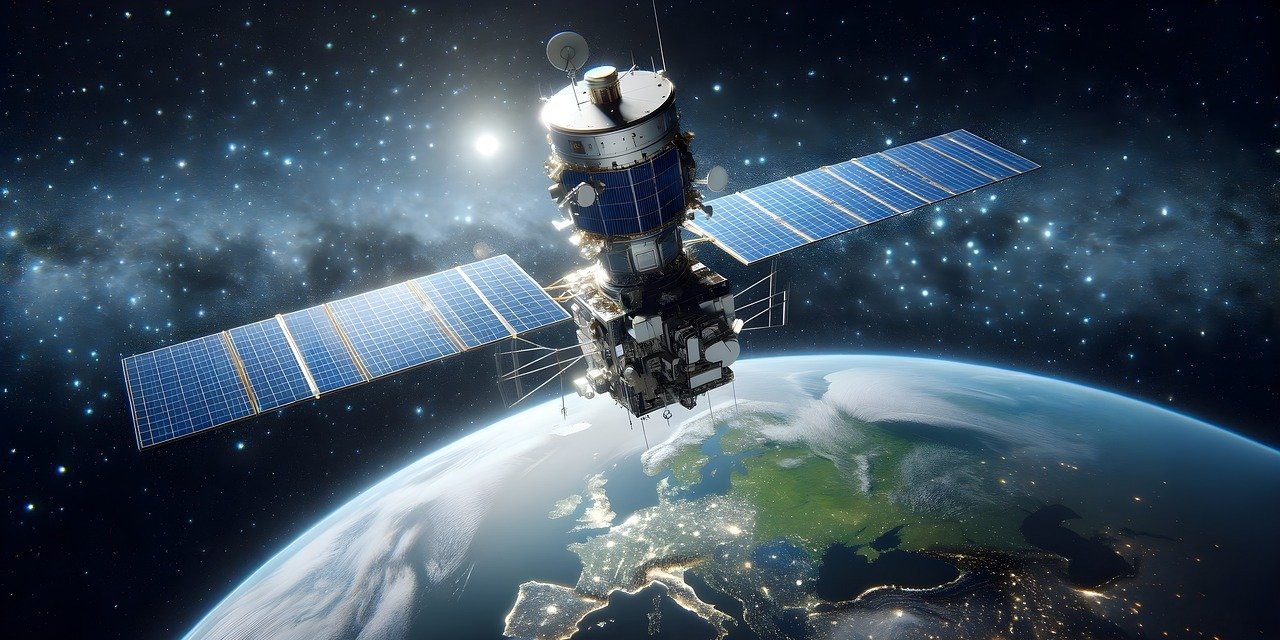
To address this, ETHER developed a fully integrated 3D network architecture, where terrestrial, aerial, and space-based components operate as a single, coordinated system rather than as separate layers. In contrast to today’s networks, where satellite connectivity often acts as a fallback or extension, ETHER embeds non-terrestrial networks directly into the core of the architecture. As a result, services can be delivered seamlessly across ground infrastructure, airborne platforms, and Low Earth Orbit (LEO) satellites, ensuring continuous coverage even in remote, maritime, or disaster-affected regions.
Intelligent, zero-touch network operation
Crucially, this architecture is not only integrated but also intelligent. By incorporating artificial intelligence into the control and management layers, ETHER enables what can be described as a zero-touch network: a system capable of monitoring itself, predicting demand, and dynamically allocating resources without human intervention. This represents a significant step beyond the current state of the art, where network optimisation still relies heavily on manual configuration and static planning. Reflecting on the project’s achievements, project coordinator Konstantinos Ntontin notes:
“With ETHER, we have demonstrated that truly global, sustainable connectivity is an achievable reality by tightly integrating terrestrial and non-terrestrial networks into a single intelligent system. We are not only extending coverage but fundamentally rethinking how networks operate and making them more adaptive, energy-efficient, and resilient. These results provide a concrete foundation for the evolution of next-generation 6G communication infrastructures.”
Dr. Konstantinos Ntontin, ETHER project coordinator, University of Luxembourg
Key innovations and real-world use cases
At the same time, several enabling technologies developed within the project push the boundaries of what 6G networks can achieve. ETHER demonstrates direct connectivity between handheld devices and LEO satellites, eliminating the need for intermediary infrastructure and opening the door to truly global mobile access. In parallel, the project introduces flexible, software-defined satellite payloads, allowing satellites to dynamically adjust their functionality in orbit, while semantics-aware communication mechanisms reduce unnecessary data transmission and improve overall energy efficiency, particularly in large-scale IoT deployments.
These innovations have been validated through a set of real-world use cases that illustrate their practical impact. In one scenario, ETHER enables global service provisioning for delay-tolerant IoT applications, supporting connectivity in rural, offshore, and hard-to-reach environments. In another, it demonstrates direct handheld device access enabled by seamless and 3GPP compliant vertical handovers between terrestrial and satellite networks, highlighting a pathway toward eliminating coverage gaps altogether. A third use case focuses on airspace safety-critical operations, where continuous connectivity and real-time edge resource orchestration are essential for aviation and emerging autonomous aerial systems.
Sustainability and economic viability in a 6G Europe
Beyond technical innovation, ETHER places strong emphasis on sustainability and economic viability. By optimising how terrestrial and non-terrestrial infrastructures interact, the project shows that it is possible to achieve near-global coverage, ultra-high reliability, and substantial reductions in energy consumption and operational costs. In doing so, it provides a credible pathway toward future 6G systems that are not only more capable, but also more responsible.
As the telecommunications sector moves closer to the realisation of 6G, ETHER offers more than a set of technological advances. It delivers a clear blueprint for how networks can evolve to meet both societal needs and environmental constraints. By bridging terrestrial and space-based infrastructures through intelligent orchestration and flexible design, the project sets a new benchmark for connectivity that is at once smarter, greener, and more inclusive.
Find out more
- ETHER Final Showcase: Sustainable 3D Terrestrial–Non-Terrestrial Networks for Future 6G Services | Use case demonstration webinar, March 2026.
- ETHER: A Sustainable 3D Architecture | Webinar presentation, Joint NTN Workshop, November 2024
- ETHER Use Case Demonstrations | Demo video playlist
Press contact & social media
- Website | www.ether-project.eu
- E-mail | info@ether-project.eu
ETHER consortium